
How Does Sustainable Cleaning Support Your ESG Goals?
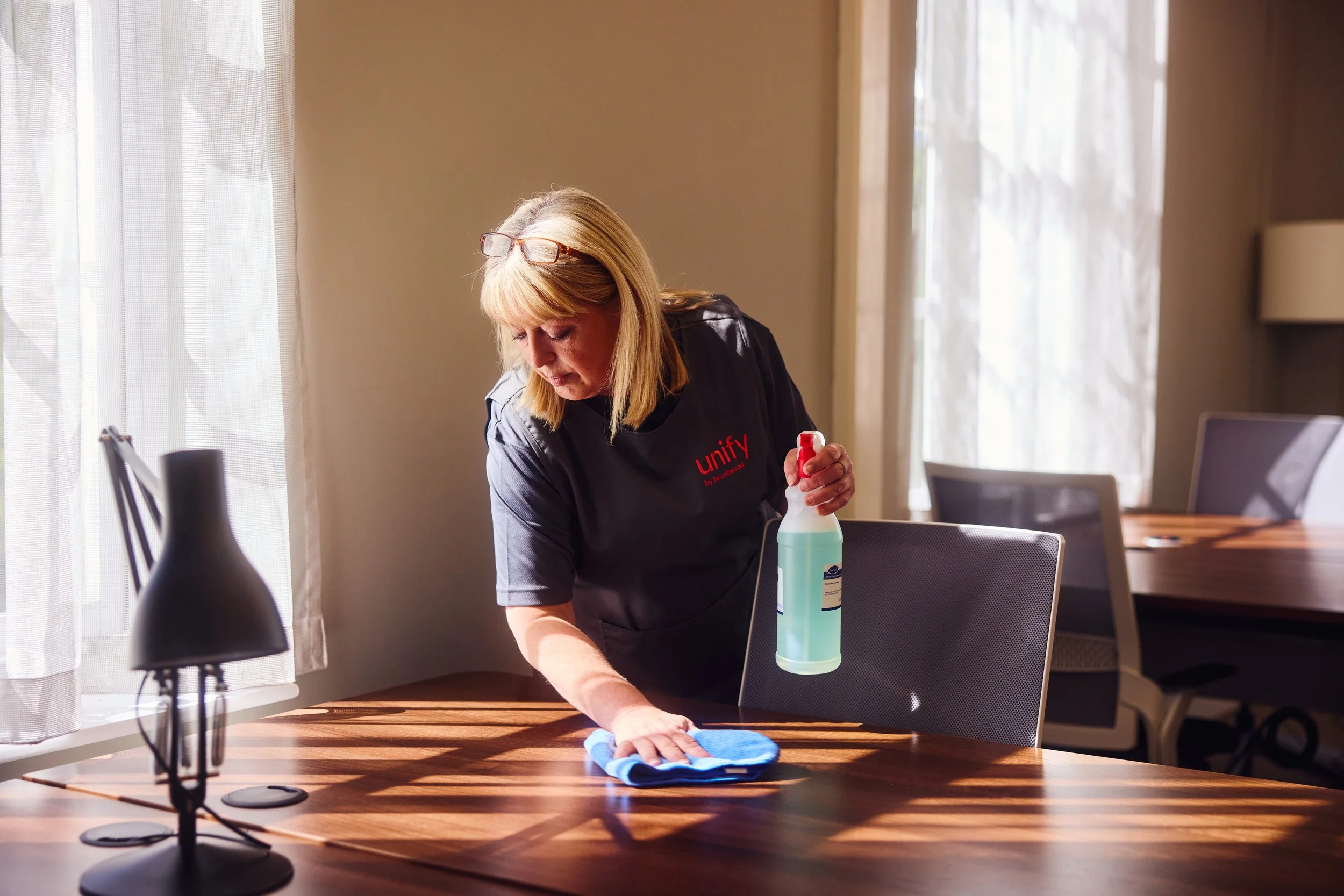
Sustainability in cleaning is no longer a badge, it’s a baseline expectation. For businesses navigating the complexities of ESG (Environmental, Social, and Governance) targets, the cleaning sector represents a significant, yet often overlooked, opportunity to create positive impact.
A truly sustainable cleaning operation isn’t just about swapping one bottle of detergent for another; it’s a complete strategy that balances human health, environmental care, and resource efficiency.
The evolution of sustainable products
The industry is moving away from traditional, high-VOC (Volatile Organic Compound) chemicals. Modern cleaning now uses biotech and chemical-free solutions that deliver the same performance, without the harmful residues.
When we talk about sustainability, we often jump straight to carbon numbers. But the real opportunity is much broader. By moving to concentrated products or solutions generated onsite, organisations can significantly cut the emissions that come from transporting heavy, water-based cleaning products. Less weight on the road means fewer deliveries, lower fuel use, and a smaller overall footprint.
But sustainability isn’t just environmental. It’s human. It’s a people-first measure of success. Removing harsh, hazardous irritants from cleaning products helps create a safer, healthier environment for cleaning teams. It reduces the risk of respiratory problems and skin irritation, and shows a genuine commitment to the wellbeing of the people doing the work every day.
And the benefits go beyond the cleaning team. For everyone who uses the space, it means fewer chemical residues and no overpowering artificial scents lingering in the air. The result is a workplace that simply feels better to be in, with cleaner indoor air and a healthier environment for all.
Rethinking waste
Waste isn’t something to hide. It’s something to measure and redesign. A progressive cleaning partner looks beyond simply emptying bins and instead asks: where does this material go next? Because “away” isn’t a place. It’s a process.
With the right systems in place, waste can be redirected, recovered and repurposed rather than sent to landfill. Materials Recycling Facilities enable dry mixed recyclables like paper, plastics, glass and metals to be sorted and returned to the manufacturing cycle, reducing reliance on raw materials.
Food waste can be sent to anaerobic digestion facilities, where it’s converted into renewable energy and nutrient-rich bio-fertiliser. Non-recyclable residual waste can be diverted to energy-from-waste plants, ensuring it generates power instead of occupying landfill space.
The result is a zero-to-landfill strategy that turns waste management into measurable environmental impact, with transparent reporting that supports your ESG disclosures and Scope 3 calculations.
It’s the circular economy in action: less waste, more recovery, and better accountability across the supply chain.
Efficiency-first operations
Sustainability in cleaning also involves an "efficiency-first" mindset. This means looking at the building as a living ecosystem. By collaborating on smarter scheduling - such as "daytime cleaning" or "team cleaning" models - businesses can reduce the hours a building needs to be fully lit and heated. This collaborative approach ensures that the cleaning process supports, rather than hinders, the building's overall energy performance.
How we drive your sustainability goals
At Unify, we understand that our performance is a direct reflection of your commitment to the planet. We don't just provide a service; we provide a transparent, ethical partnership designed to help you hit your net-zero and ESG targets.
By integrating sustainable products, zero-to-landfill waste management, and energy-efficient operations, we ensure your workspace is as ethical as it is clean.
Find out more about the impact we make through ethical employment and sustainability practices here.
